
Short answer: the old mine cut is how diamonds were cut by hand in the 18th and 19th centuries, before electric lighting and modern cutting machines. It has a soft cushion-like outline, a high crown, a small table, and a large flat culet you can see through the top of the stone. It trades the white glitter of a modern brilliant for slow, warm flashes of light. Today you can get that character in a brand-new lab grown diamond, faceted to the antique pattern.
Where the old mine cut comes from
Before the 1900s, diamond cutters worked by hand and by eye, often judging a stone's fire under candlelight. The old mine cut was the standard result of that era, roughly the Georgian and Victorian periods. Each stone followed the shape of the rough crystal it came from, so no two are quite alike: slightly squarish, slightly lumpy, unmistakably human.
The old European cut came later in the 19th century. It keeps the small table and large culet but moves to a rounder outline, a stepping stone toward the modern round brilliant. If you like the antique look but want a round silhouette, that is the one to compare. You can see both side by side on our old mine and old European shape pages.
What makes it look different
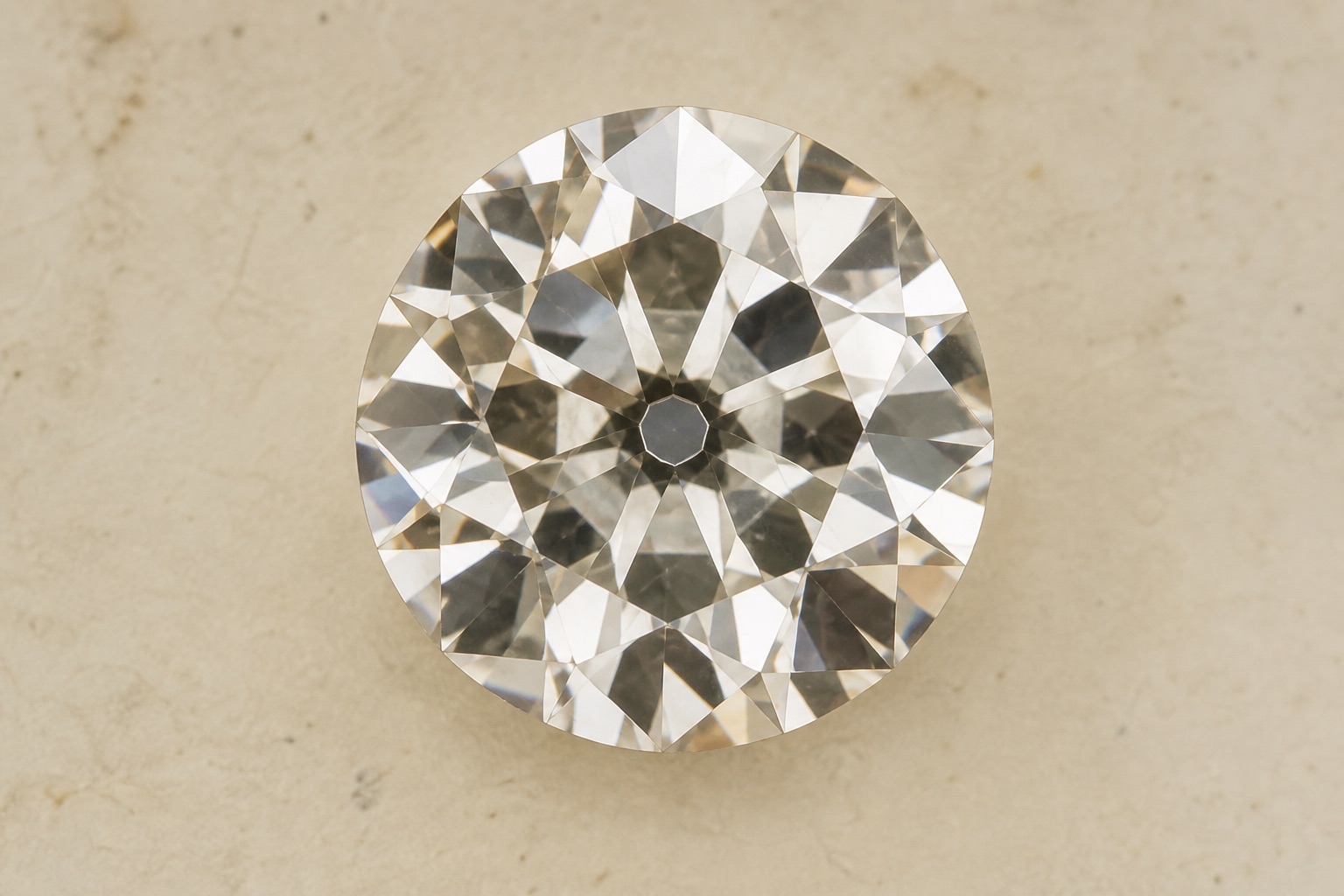
Four features define the cut, and all four are visible to the naked eye:
- A high crown. The top of the stone sits tall above the setting, giving it real presence from the side.
- A small table. The flat facet on top is much smaller than on a modern cut, so more of the light play happens in the sloped facets around it.
- A large culet. The bottom facet is cut flat instead of ending in a point. Looking straight down, you see a small octagonal window in the center. On a modern stone this would be a flaw. On an old mine cut it is the signature.
- Chunky facets. The same facet count as a modern brilliant, but each facet is broader. Broad facets return light in slow, distinct flashes rather than fine sparkle.
How it handles light
A modern round brilliant is engineered to maximize brightness: fine facets, crisp white glitter, edge-to-edge light return. An old mine cut behaves differently. Under soft or low light, the kind it was designed for, it gives fewer but bigger flashes, with more visible fire, the rainbow component of a diamond's light. People often describe it as a glow rather than a sparkle.
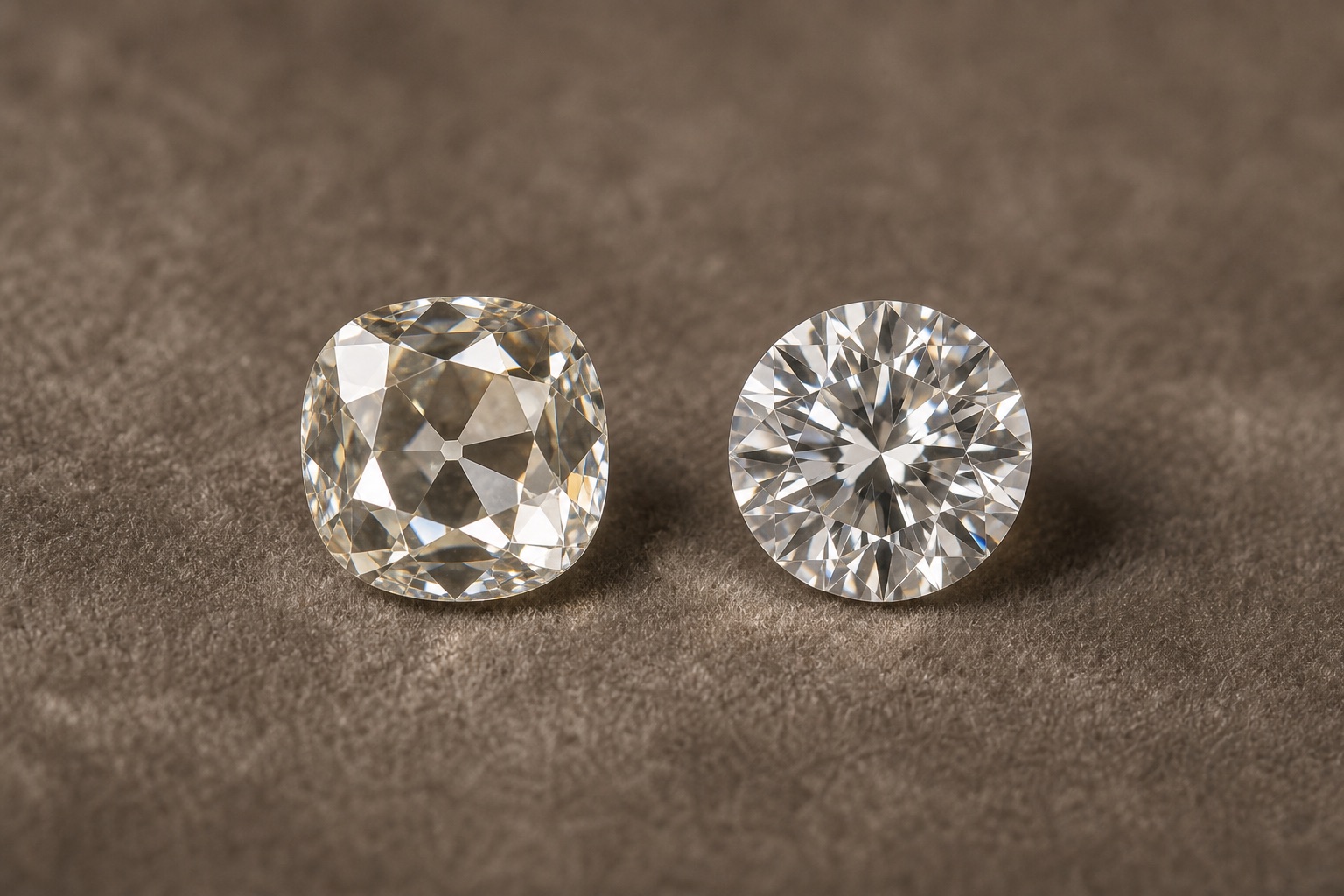
Neither is better. It is a genuine matter of taste. If you love the look of maximum brilliance, a modern cut will make you happier. If you find modern stones a little clinical and want something with warmth and character, the old mine cut is exactly that.
Antique character, new stone
Genuine antique diamonds are lovely but come with real compromises: worn facet edges, chips hidden under settings, no grading report, and a price driven by rarity rather than quality. A lab grown diamond faceted to the old mine pattern gives you the antique geometry without those unknowns. The stone is new, the color and clarity are what the report says they are, and center stones of 1 carat and above come with an IGI report you can verify online.
At Caraluxa, old mine and old European cuts are one of the things we deliberately stock deep, in solitaires, three-stone rings, and bezel settings. You can browse the full lineup in our old mine cut vintage collection.
FAQ
Does an old mine cut sparkle less than a modern cut? It sparkles differently. Broad facets produce larger, slower flashes with more visible fire, instead of the fine white glitter of a modern brilliant. In candlelight and evening light it is at its best.
Is the visible culet a defect? No. The flat culet is a defining feature of the cut. If the little window in the center bothers you, the cut is probably not for you, and that is worth knowing before you buy.
Old mine cut vs cushion cut: what is the difference? The outline is similar, which is why they get confused. A modern cushion cut has a large table, a pointed culet, and fine modern faceting, so it sparkles like a contemporary stone. An old mine cut keeps the antique proportions: small table, high crown, flat culet, chunky facets.
Does it face up smaller than a modern cut of the same carat? Usually a little, yes. More of the weight sits in the tall crown and deep pavilion rather than the spread. If face-up size is your priority, consider going up slightly in carat, or look at an oval or pear instead.
Is it a good engagement ring choice? If the person you are buying for loves vintage character, it is one of the most distinctive choices you can make, and one they are unlikely to see on anyone else's hand.
Explore the collection
See every old mine and old European piece in one place in the old mine cut vintage collection, or start from the stone itself with our guide on how to choose a lab grown diamond.


