
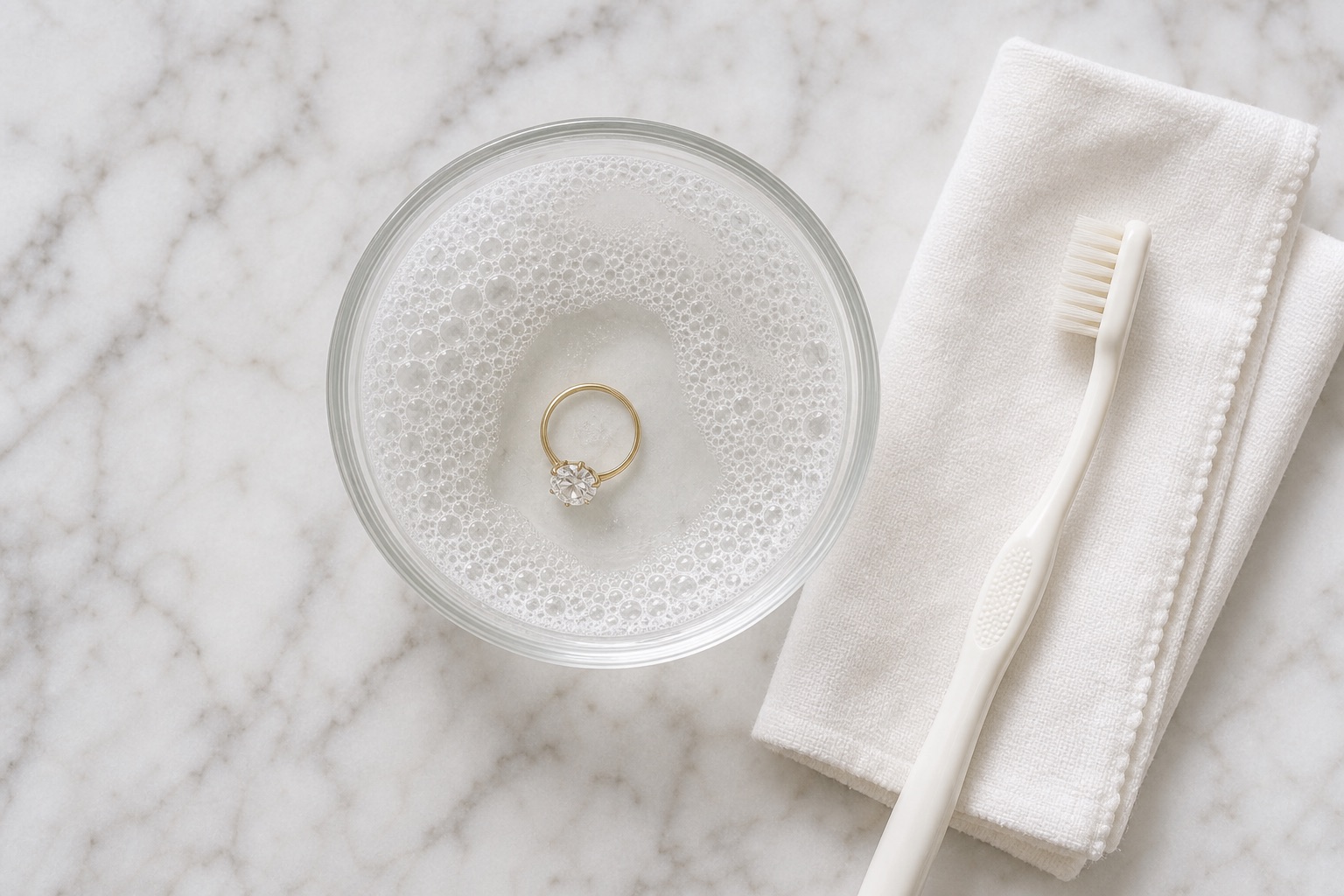
Short answer: soak the ring in warm water with a few drops of plain dish soap for 20 to 30 minutes, brush gently with a soft toothbrush, rinse, and pat dry with a lint-free cloth. That is the whole method, and done every week or two it keeps a diamond looking the way it did in the box. And no, lab grown diamonds do not get cloudy with age. If yours looks dull, it is dirty, not degrading.
First, the myth: "do lab grown diamonds get cloudy?"
Lab grown diamonds do not get cloudy. A lab grown diamond is pure crystallized carbon, the same material as a mined diamond, and diamond does not fog, yellow, or lose its sparkle over time. The cloudy-over-years problem belongs to some diamond simulants, and the worry gets transferred to lab grown stones because "lab" sounds similar. It is not.
What a diamond does do, mined or lab grown, is attract grease. Diamond is lipophilic, meaning skin oils, hand lotion, sunscreen, and cooking residue cling to its surface, especially the underside. A thin film of oil is enough to mute the sparkle noticeably. That is why a ring worn daily looks flat after a few weeks and looks new again after a five-minute clean.
The routine clean (every 1 to 2 weeks)
- Mix: a bowl of warm (not hot) water with two or three drops of plain dishwashing liquid. Nothing fancier is needed, and harsher is worse.
- Soak: 20 to 30 minutes, to loosen the oil film and anything lodged under the stone.
- Brush: a soft-bristled toothbrush, gently, paying attention to the underside of the setting where grime collects. Do not scrub hard; the metal is softer than the stone.
- Rinse: in a bowl of clean water, not over an open drain. Rings do go down sinks.
- Dry: pat with a lint-free cloth or let it air-dry. Paper towels can leave fibers in the prongs.
What to avoid
- Chlorine and bleach. Chlorine attacks the alloy metals in gold. Take your ring off for pools and hot tubs, and never clean it with household bleach.
- Abrasives. Toothpaste, baking soda, and scouring powders will not hurt the diamond, but they will scratch gold and platinum.
- Ultrasonic cleaners, with caution. A solitaire with a sturdy setting handles them fine. But rings with pavé, a hidden halo, or many small side stones can have stones vibrate loose. If your ring has small stones, stick to soap and water at home and leave ultrasonic cleaning to a jeweler who will check the setting afterward.
- Wearing it for rough work. Gym sessions, gardening, and moving furniture are how prongs get bent and gold gets gouged. The diamond survives; the setting takes the damage.
Metal care: what changes over years is the metal, not the stone
- White gold is yellow gold alloyed toward white and finished with a bright rhodium layer. That layer wears with daily use, so most white gold rings warm slightly in tone after a couple of years. Re-plating is a quick, inexpensive service any local jeweler offers, and the ring comes back looking new.
- Yellow and rose gold need no plating. They pick up fine surface scratches with wear, which most people accept as patina; a jeweler's polish removes them.
- Platinum is naturally white all the way through and never needs plating. It develops a soft satin patina over time, which can be re-polished to a mirror finish whenever you like.
Two habits that prevent expensive problems
- Check the prongs twice a year. Hold the ring to your ear and tap it gently; a faint rattle means a loose stone. Any local jeweler can tighten prongs in minutes, and it is far better than finding an empty setting.
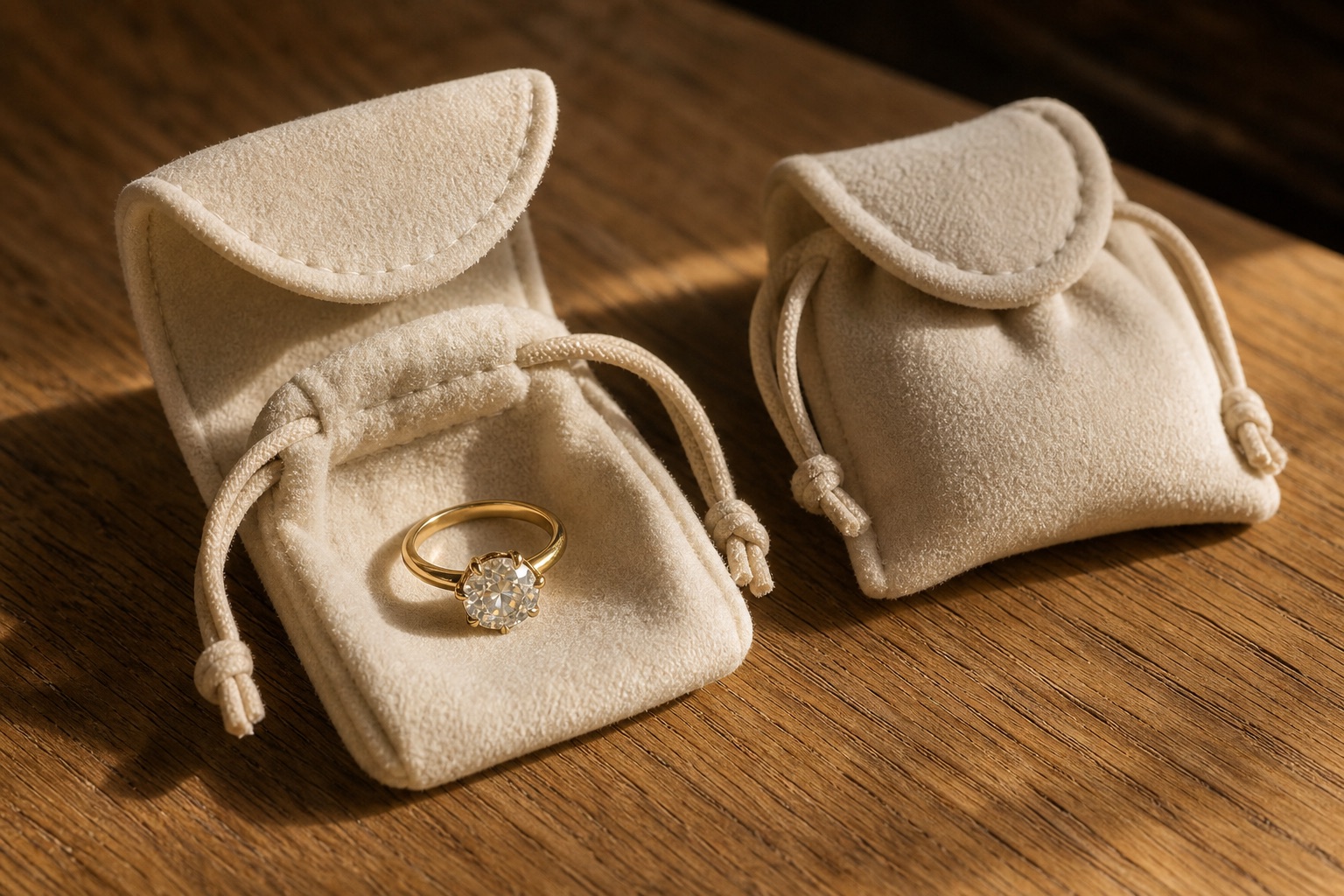
- Store it alone. Diamond is the hardest material there is, which means your ring will scratch every other piece of jewelry it tumbles against in a shared box. A separate soft pouch or a slotted tray solves it.
FAQ
How often should I clean my ring? Every one to two weeks with the soap-and-water method keeps it consistently bright. Even once a month makes a visible difference.
Can I use jewelry cleaning solutions? The mild ammonia-free ones for diamonds and gold are fine, though they do not do much that dish soap does not. Avoid anything not labeled for your metal.
My white gold band looks yellowish. Is something wrong? No, that is the rhodium plating wearing through, which is normal for all white gold. Re-plating restores it.
Do earrings need the same care? Yes, and lab grown diamond earrings usually need it more, since hair products and skin oils reach them daily and they are cleaned less often. Same method: soak, soft brush, rinse, dry.
Related reading
New to lab grown stones? Start with why lab grown and how to choose a lab grown diamond. Buying a ring as a surprise? Our ring size guide covers how to find their size without asking.


